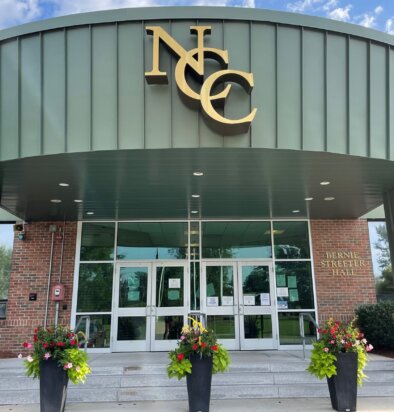
NCC President James Keane: Blogposts and Columns

As Some Colleges Near $100,000 a Year, the Value of Community Colleges Has Never Been Clearer

The cost of higher education in the United States continues to rise, creating challenges for students and families across the country. For generations, a college degree was seen as the key to economic opportunity. Today, many families are asking a different question: Is college worth the cost?

At some of the nation’s most prestigious colleges and universities, the answer has become more complicated. When tuition, fees, housing, meals, books, transportation, and other expenses are included, the total annual cost at some schools is approaching or exceeding $100,000 per year. For the 2026-27 academic year, at least 16 colleges are expected to have published costs above that level. Supporters of these institutions correctly note that many students receive financial aid and pay less than the advertised price. Still, the idea of a six-figure annual college bill raises important questions about the affordability and value of higher education.

As costs continue to climb, some high school graduates are choosing to enter the workforce immediately instead of attending college. While working right after high school allows young adults to start earning money sooner, research shows that earning an associate degree often leads to stronger long-term financial outcomes. On average, people with an associate degree earn about 18 percent more than those with only a high school diploma. They also experience lower unemployment rates and have access to a wider range of skilled careers. The emergence of the “$100,000 college” has renewed attention on one of America’s most important, yet often overlooked, educational resources: community colleges.

Community colleges provide a high-quality education at a much lower cost than most four-year institutions. Their mission has always been to offer affordable, local educational opportunities while helping students achieve their academic and career goals.  Today, community colleges serve a diverse population that includes recent high school graduates, working adults, career changers, military veterans, and people looking to advance in their professions. Nationally, community colleges enroll nearly 39 percent of all college students.  They offer strong academic programs that prepare students to transfer to four-year universities. They also provide career and technical education programs that meet local workforce needs. Smaller class sizes often allow for more personal attention and stronger relationships between students and faculty.

Unlike many four-year institutions, community colleges generally maintain an open-access admissions policy, giving more students the opportunity to pursue higher education regardless of past academic performance. To ensure student success they are also known for providing extensive student support services, including academic advising, tutoring, coaching, counseling and other social support resources that help students succeed.  By combining affordability, quality education, and strong student support, community colleges have become an important gateway to higher education and career success.

One of the most effective and affordable ways to earn a bachelor’s degree is through the community college “2+2 model.”  In this approach, students spend their first two years at a community college completing general education and major focused courses and earning an associate degree. They then transfer to a four-year college or university to complete the final two years required for a bachelor’s degree.  This pathway allows students to receive quality instruction and support services at a significantly lower cost. Through transfer agreements with universities, many community colleges make it easier for students to transfer credits and stay on track toward graduation.  The result is a lower-cost pathway to the same bachelor’s degree and many of the same career opportunities available to students who begin at a four-year institution. According to the National Student Clearinghouse Research Center, nearly 500,000 students transfer from two-year to four-year institutions each year, making it the most common transfer route in American higher education.

Community colleges are no longer focused solely on traditional academic programs. Many now serve as major workforce development centers, offering degrees and certificates in fields such as healthcare, information technology, cybersecurity, advanced manufacturing, engineering, construction trades, logistics, aviation, renewable energy, automotive technology, and criminal justice.  In many communities, they have become the leading providers of workforce training. Because they can often adapt more quickly than larger universities, community colleges are able to respond to changing economic and industry needs.  Employers increasingly partner with community colleges to create customized training programs and address labor shortages. Many of these programs can be completed in a relatively short time, allowing students to gain valuable skills and enter the workforce quickly.  These efforts help both students and employers by creating a skilled workforce that is prepared for today’s job market.

The growth of $100,000 colleges has sparked a broader conversation about what students and families should expect from higher education.  Prestigious universities offer many advantages, including extensive resources, research opportunities, and strong alumni networks. For many students, those benefits may justify the cost.  However, educational value should not be measured by reputation alone. It should also include factors such as teaching quality and class size, affordability, student support, transfer opportunities, career readiness, and employment outcomes.  By many of these measures, community colleges perform exceptionally well. They provide affordable access to education, help students prepare for good careers, support local economies, and allow individuals to pursue their goals without taking on excessive debt.

As more colleges cross the symbolic $100,000 threshold, the difference between elite university costs and community college affordability will become even more noticeable.  This does not lessen the importance of prestigious universities. Instead, it highlights the need for a higher education system that serves students with different goals, financial situations, and career aspirations. Community colleges were founded on a simple idea: education should be accessible to everyone. At a time when the annual cost of some colleges exceeds what many Americans earn in a year, that mission is more important than ever. Their value is not just in their lower tuition. It is in their commitment to opportunity, student success, and upward mobility. As the national conversation about college affordability continues, community colleges may prove to be not just an alternative pathway, but one of the most important foundations of higher education’s future.

Dr. James M. Keane
President of Nashua Community College
July 24, 2026

See the column on Nashua Ink Link